Tech Industry NewsDeveloper Careers
US Green Card Guide for Indian Students and Tech Professionals (2026): Every Step and Every New Rule
A simple, complete guide to the US green card journey for Indians in 2026, from F-1 student visa and OPT to H-1B, PERM, I-140 and the final step. Includes every major rule that changed this year, the current India visa bulletin dates, and a practical plan for students and working professionals.

MetaSkillGroup
14 min read6

For lakhs of Indian families, the "American dream" follows a familiar path. Do a Master's in the US, work on OPT, get an H-1B, and one day, get a green card. It was never easy, but at least the road was clear.
In 2026, that road has changed. Almost every step, from the student visa to the final green card interview, has seen a new rule, a new fee, or a new court case. Some of these rules are already in force. Some are only proposals. Some have been blocked by courts. And it is very easy to get confused.
This guide puts everything in one place, in simple words. We walk through the full journey step by step, explain what changed at each step in 2026, show where things stand today, and give you a practical plan, whether you are a student in India or already working in the US.
📌 Who is this guide for? Indian students planning to study in the US, students already there on F-1, H-1B workers waiting for their green card, and their families back home.
In this guide:
- 2026 Changes at a Glance
- The Usual Road to a Green Card
- Step 1: Studying on an F-1 Visa
- Step 2: OPT and STEM OPT
- Step 3: Getting an H-1B
- Step 4: PERM, the First Green Card Step
- Step 5: I-140 and the Long Wait
- Step 6: The Final Step
- Why Indians Are Hit the Hardest
- Is the American Dream Over?
- Your Smart Plan for 2026
- Other Paths Worth Knowing
2026 Changes at a Glance
Here is every major change in one table. Bookmark this section.
| Rule / Action | Step It Hits | Status Today (October 2026) |
|---|---|---|
| Four-year limit on F-1 student status | F-1 study | Blocked by court on 14 Sept 2026, DHS appealed |
| $70,000 fee for OPT, $30,000 for STEM OPT | OPT | Proposed, comments open till 9 Nov 2026 |
| $100,000 fee on new H-1B workers | H-1B | Blocked by two federal courts |
| $103,265 fee on H-1B cap petitions | H-1B | Proposed in Aug 2026, not in effect |
| 8 companies suspended from PERM | PERM | In effect from 8 Oct 2026 |
| Adjustment of status treated as a "favour" | Final step | In effect since May 2026, lawsuit filed |
We explain each of these below.
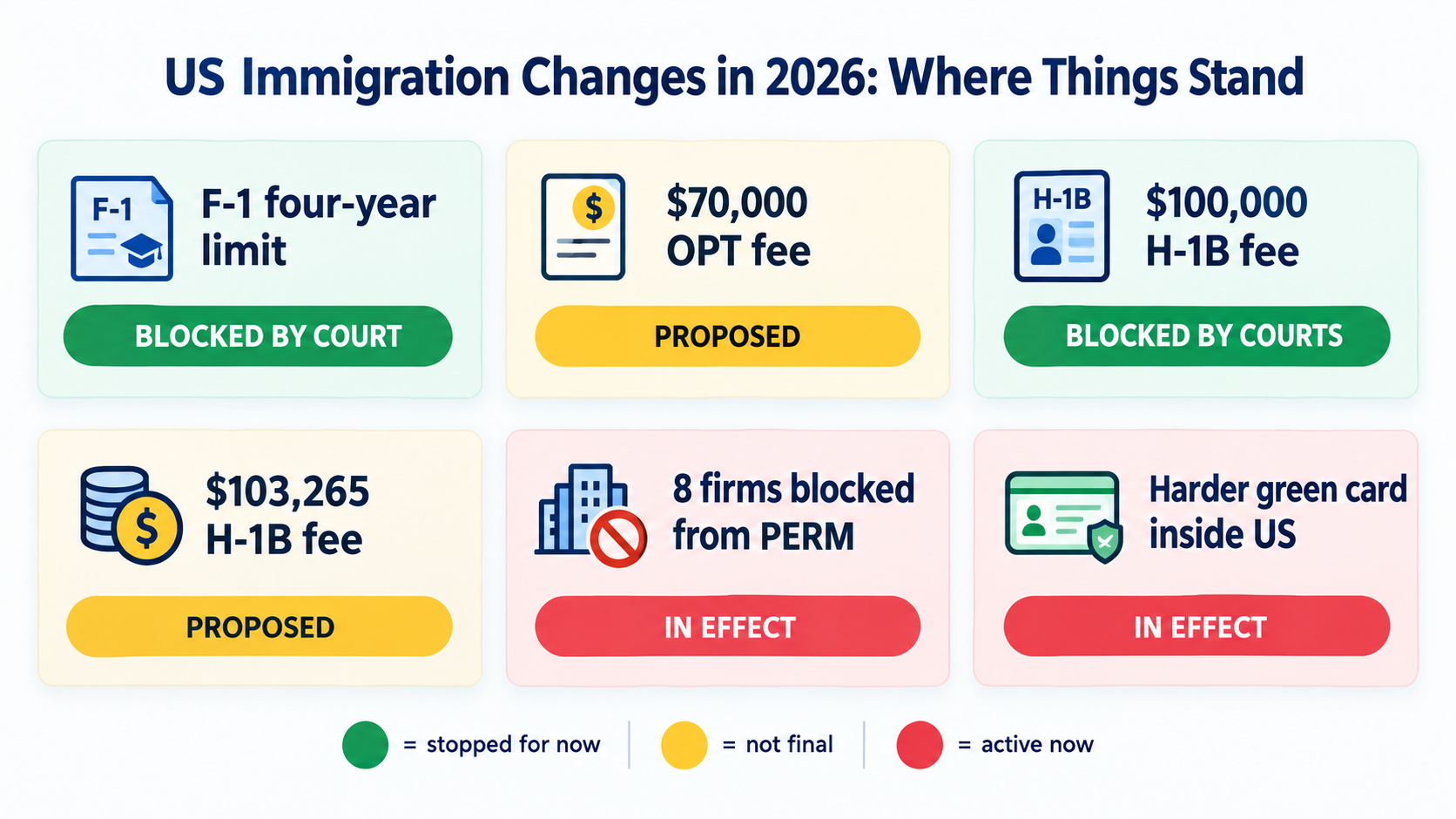
Figure 1: Some 2026 rules are active, some are only proposals, and some have been stopped by courts.
The Usual Road to a Green Card
Most Indian tech professionals follow the same six steps:
- F-1 visa: Study a Bachelor's or (more commonly) a Master's in the US.
- OPT and STEM OPT: Work in the US for up to 3 years after graduation.
- H-1B: Get selected in the H-1B lottery and work for an employer.
- PERM: The employer proves no suitable American worker is available.
- I-140 and waiting: The employer files a petition, and you wait for your turn in the queue.
- Final step: Complete your green card, inside the US or at a consulate abroad.
Some people join at Step 3 directly, for example when an Indian IT company sends them to the US on H-1B. But the later steps are the same for everyone.
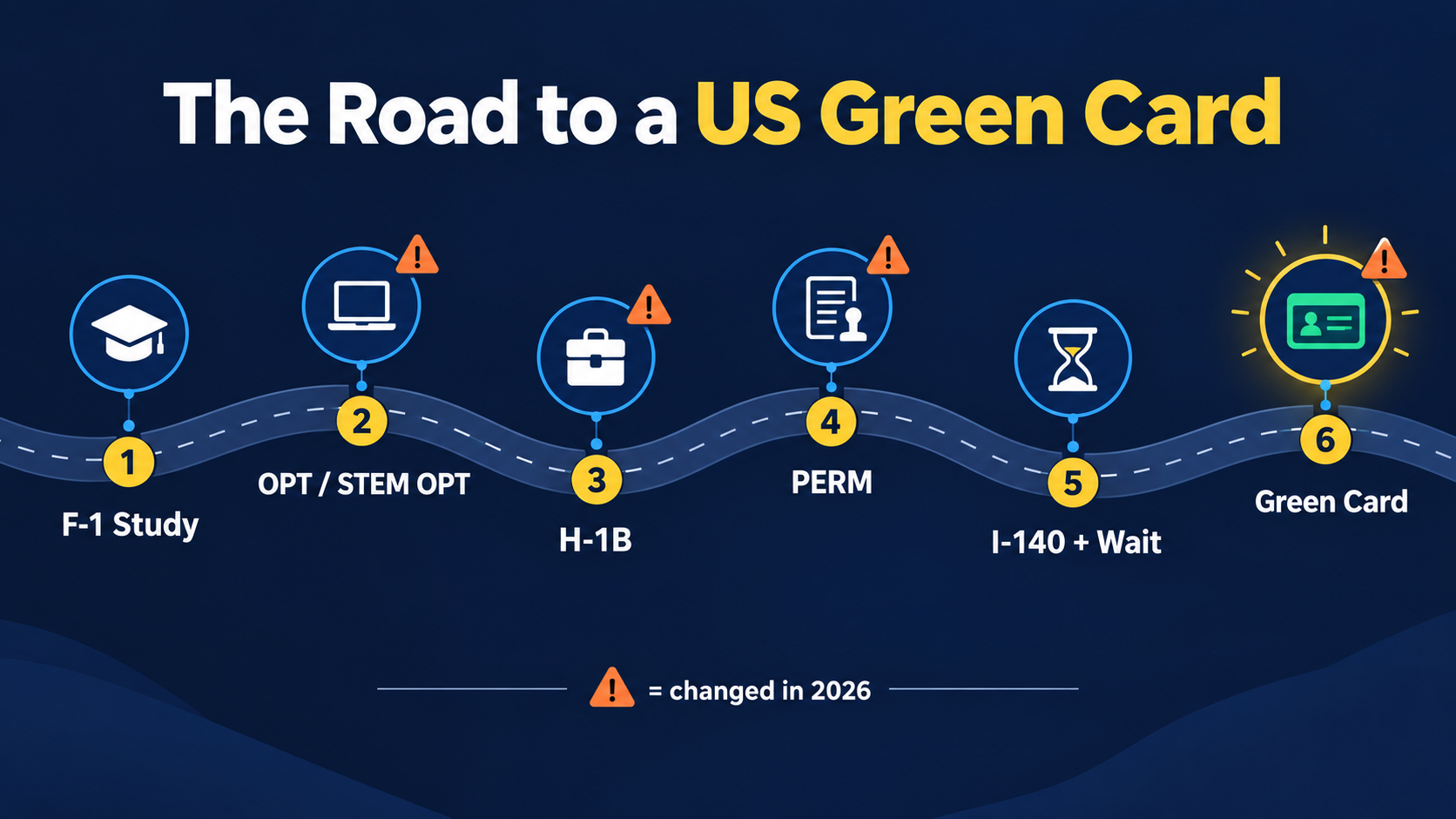
Figure 2: The six-step road most Indians follow. Four of these steps saw major changes in 2026.
Step 1: Studying on an F-1 Visa
For decades, F-1 students were allowed to stay in the US for "duration of status". This simply means: as long as you are studying properly, you can stay. There was no fixed end date.
On 17 July 2026, the US published a final rule to end this system (Biz Legal Services). Most F-1 and J-1 visa holders would have been limited to a maximum of four years, and changing programs or starting a new degree would have become harder (Clark Hill).
Good news: on 14 September 2026, a federal court in Massachusetts blocked this rule across the US, one day before it was to start. The old "duration of status" system continues for now (Clark Hill). But this is a temporary order. The case is still going on, and DHS has appealed the block to a higher court. If the appeals court sides with DHS, the rule could still take effect (College Help Guide).
What it means for you: Nothing changes for current students right now. Keep following your visa rules carefully, and keep an eye on the court case.
Step 2: OPT and STEM OPT
OPT (Optional Practical Training) lets F-1 students work in the US for 12 months after graduation. STEM graduates can get 24 more months through STEM OPT (US News / AP). For most Indian students, these OPT years are when they try the H-1B lottery.
What changed in 2026: On 7 October 2026, the US proposed that universities pay $70,000 for a student's first OPT and $30,000 for every later OPT, including STEM OPT. For a typical STEM student, that is $100,000 in total (National Law Review). The school pays on paper, but the cost can be passed on to students.
The proposal is not final. Public comments are open until 9 November 2026, and the fee would only start 60 days after a final rule is published (Federal Register).
👉 Read the full explainer: US Proposes $70,000 OPT Fee: What It Means for Indian Students
Step 3: Getting an H-1B
The H-1B is the main US work visa for skilled professionals. Every year, there are 65,000 regular H-1B visas plus 20,000 for people with US Master's degrees or higher, and they are given through a lottery (Reddy Neumann Brown).
What changed in 2026:
- Fewer people are applying. H-1B registrations fell by 38.5% for FY2027, from 3,43,981 to 2,11,600. USCIS also said it selected more applicants with higher degrees and higher salaries (Business Standard).
- The $100,000 fee is blocked by courts. This fee was created by a presidential order in September 2025. A federal court in Massachusetts declared it unlawful on 8 June 2026, and an appeals court refused to bring it back on 24 July 2026 (Ellis). A new order on 18 September 2026 tried to extend it until 21 September 2027 (Mintz). But on 30 September 2026, a second federal court in California also blocked the fee, and that ruling covers the extension too (Biz Legal Services).
- A new $103,265 fee was proposed. On 25 August 2026, the US proposed a separate fee of $103,265 on every H-1B petition that counts against the yearly cap (Federal Register). It is only a proposal and is not being charged today (Ellis).
What it means for you: H-1B is still possible, but employers are becoming more selective. A higher degree, a strong salary level and real skills now matter more than ever.
Step 4: PERM, the First Green Card Step
Once you are on H-1B, your employer can start your green card. The first step is PERM. The employer has to advertise the job in the US and then prove to the Department of Labor that no suitable American worker was available (OPB / AP).
What changed in 2026: On 8 October 2026, the US suspended eight companies from PERM: Microsoft, Adobe, Cognizant, Infosys, TCS, Wipro, HCL Technologies and Capgemini (Ellis). Six of these are IT services firms that employ a very large number of Indians. The US says it is investigating possible visa fraud. Cognizant had already been suspended once in September 2026.
This does not cancel anyone's H-1B or job. But for employees of these companies, the green card journey has stopped at the first gate for now.
👉 Read the full explainer: US Blocks Microsoft, Infosys, TCS and 5 Other Firms From Green Card Sponsorship
Step 5: I-140 and the Long Wait
After PERM is approved, the employer files Form I-140. Once that is approved, you get a priority date, which is your place in the green card queue.
Here is the hard truth for Indians. The US gives green cards with a per-country limit, so no single country can take more than a small share of the yearly total. Because so many Indians apply, the Indian queue is the longest in the world.
The monthly Visa Bulletin shows how far each queue has moved. These are the October 2026 final action dates for India:
| Category | Who It Is For | India Cut-off Date (Oct 2026) |
|---|---|---|
| EB-1 | Top talent, senior managers, researchers | 1 February 2023 |
| EB-2 | Advanced degree holders | 1 November 2013 |
| EB-3 | Skilled workers and professionals | 1 January 2014 |
Source: American Visa Law Group
In simple words, if your priority date is earlier than the date shown, it is your turn. If not, you keep waiting. An Indian engineer in EB-2 who got their priority date in 2014 is still waiting in 2026.
It even got worse in mid-2026. EB-2 India was fully unavailable from July to September 2026, because the yearly limit for India was used up. It opened again only in October, with the new financial year (Biz Legal Services).
💡 Tip: You can check the latest Visa Bulletin every month on the US State Department website. Dates can move forward, stay the same, or even move backward.
Step 6: The Final Step
When your priority date becomes current, you complete your green card in one of two ways:
- Adjustment of status (AOS): You stay in the US and file Form I-485.
- Consular processing: You go to a US consulate abroad, usually in India, for an immigrant visa interview.
What changed in 2026: On 21 May 2026, USCIS issued a memo (PM-602-0199) that treats adjustment of status as an "extraordinary relief" and a matter of the officer's discretion, not a normal right (USCIS memo PDF). In public, the government said temporary visa holders should go back home and apply from there, except in extraordinary cases (NBC News).
A lawsuit against this policy was filed on 5 October 2026, but the policy remains in effect for now (Visas Update).
👉 Read the full explainer: New US Green Card Rule: Why Many Indians May Have to Go Back Home
Why Indians Are Hit the Hardest
Every rule above applies to everyone. But Indians feel each one more than anyone else. Here is why:
- Indians get about 71% of all H-1B approvals. In FY2024, 283,397 out of 399,395 approved H-1B petitions went to people born in India (Business Today). Any H-1B rule is basically an Indian rule.
- Indians are a huge part of OPT. In 2025, 40% of Indian students in the US were on OPT (ICEF Monitor).
- Indians wait the longest for green cards, often more than 10 years.
- Indian IT firms are directly targeted. Six of the eight companies blocked from PERM are IT services firms with large Indian workforces.
- Indian IT firms had already cut H-1B use. New H-1B approvals for India-based IT companies fell by about 70% between FY2015 and FY2025 (The Tribune). Yet they are still treated as the main problem.
The US government says it is protecting American workers. That is its right. But the people who pay the price are Indian students and professionals who followed every rule, paid their fees and taxes, and waited patiently in the longest line in the world.
Is the American Dream Over?
No, not completely. But it is no longer the safe, predictable path it once was.
The hopeful side:
- Courts are pushing back. Two courts have blocked the $100,000 H-1B fee, and the four-year student visa limit was blocked too. The green card memo has already been challenged in court, and lawyers expect the OPT fee to be challenged if it becomes final.
- Many rules are only proposals. Proposals can be changed, delayed or dropped.
- The US is still a huge job market for skilled tech workers, and top talent is still in demand.
The realistic side:
- Uncertainty is now the normal. A rule can change in a single press conference.
- Costs are rising at almost every step.
- The wait is still very long for Indians, and the final step has become riskier.
So the honest answer is this: the US is still an option, but it should not be your only option.
Your Smart Plan for 2026
If you are a student in India planning to go to the US
- Do the full maths. Add tuition, living costs, a possible OPT fee, and the H-1B lottery risk before taking a loan.
- Ask universities direct questions about OPT costs and support for international students.
- Compare at least two other countries before you decide.
- Start building real skills now. Projects, internships and a strong GitHub profile help you everywhere.
If you are already in the US on F-1 or OPT
- Stay in close touch with your DSO (international student office).
- Plan your OPT and STEM OPT timing carefully.
- Apply for the H-1B lottery every year you are eligible.
- Keep your status clean, with no gaps.
If you are on H-1B and waiting for a green card
- Know exactly where your case is: PERM, I-140 or waiting for your date.
- If your employer is one of the eight suspended companies, talk to your immigration team about your options.
- Don't travel abroad without legal advice, especially near your final step.
- Keep your documents organised: approval notices, pay slips, tax returns and offer letters.
- Track the Visa Bulletin every month.
Other Paths Worth Knowing
The H-1B and EB-2/EB-3 route is not the only way. Depending on your profile, these are worth exploring with a lawyer:
- EB-1: For people with extraordinary ability, outstanding researchers, and senior managers of multinational companies. The India queue is much shorter than EB-2 and EB-3.
- O-1 visa: For people with extraordinary achievements in their field.
- Other countries: Many countries offer post-study work options for international graduates. Compare them carefully.
- Working remotely from India: More and more Indian developers now work for global clients and companies from home. No visa, no lottery, and you earn while staying close to family. But it needs strong, proven skills.
Key Dates to Watch
- 9 November 2026: Last date for public comments on the $70,000 OPT fee.
- Every month: The new Visa Bulletin, to see if the India dates have moved.
- Ongoing: The lawsuit against the green card memo (PM-602-0199), the appeal in the student visa duration case, and the H-1B fee cases.
- Ongoing: The PERM investigation. More companies may be added to the suspension list.
⚠️ Note: US immigration rules are changing very fast in 2026. We will keep updating this guide. Always confirm your personal situation with a qualified immigration lawyer before taking any big decision.
Final Thoughts
The road from an Indian classroom to a US green card has always been long. In 2026, it has also become expensive and uncertain. New fees, new restrictions and new investigations have appeared at almost every step, and Indians feel each one the most.
But one thing has not changed: skills still win. Whether you end up in the US, another country, or working remotely from India for clients across the world, the people who can actually build things are always in demand.
So plan carefully, keep more than one option open, and invest in skills that no visa rule can take away from you.
🚀 Build real-world skills, from anywhere
The MetaSkillGroup Internship is fully remote. Work on real web and app projects, get your code reviewed by experienced developers, and build a portfolio that companies in India and abroad take seriously.
- #green card
- #h-1b
- #opt
- #perm
- #study in usa
- #us immigration
- #indian students
- #indian it professionals
- #visa bulletin
- #career abroad
❓ FAQs
Most Indians follow this path: study in the US on an F-1 visa, work on OPT and STEM OPT, get an H-1B through the lottery, then the employer files PERM and Form I-140, and finally the worker waits for their priority date before completing the green card.
It is often more than 10 years. In the October 2026 Visa Bulletin, the final action date for EB-2 India is 1 November 2013 and for EB-3 India is 1 January 2014. EB-1 India is faster, at 1 February 2023.
No. A federal court in Massachusetts struck down the $100,000 H-1B fee in June 2026, and an appeals court refused to restore it in July 2026. In September 2026, a second court in California also blocked it, including its extension to 2027. A separate $103,265 fee on cap-subject H-1B petitions was proposed in August 2026 but is not in effect.
The major ones are: a harder adjustment of status process (May 2026), a proposed $103,265 H-1B fee (August 2026), a four-year limit on student visas that a court blocked (September 2026), a proposed $70,000 OPT fee (October 2026), and the suspension of eight companies, including Infosys, TCS and Microsoft, from PERM (October 2026).
It can still be worth it, but the risk is higher than before. Several new rules are proposed or under court challenge. Plan with a clear budget, check how your university will handle OPT costs, compare other countries, and focus on building strong practical skills.
Indians receive about 71% of all approved H-1B petitions and face the longest green card queue because of the per-country limit. So any rule that touches H-1B, OPT or green cards hits Indian students and workers the hardest.
Strong profiles can look at faster US categories like EB-1 or O-1 with legal advice. Many students also compare other countries with post-study work options. And many Indian developers now work remotely for global clients from India, which needs strong skills but no visa.
Comments
Join the conversation
Login to post comments and replies
No comments yet. Be the first!