Tech Industry NewsDeveloper Careers
US Proposes $70,000 OPT Fee: What It Means for Indian Students Planning to Work in America
The US has proposed that universities pay $70,000 before an international student can start OPT, and $30,000 more for STEM OPT. Here is how the fee works, who will really pay it, when it could start, and what Indian students should do now.

MetaSkillGroup
9 min read10

Every year, thousands of Indian students take big education loans to study in the US. For most of them, the plan is simple: study for two years, work for a few years on OPT, earn in dollars, repay the loan, and maybe get an H-1B later.
On 7 October 2026, the US government put a huge price tag on that plan. It proposed that universities pay $70,000 for every international student who wants to start OPT, and $30,000 more for STEM OPT.
If you are planning a Master's in the US, or you are already studying there, this article explains what the proposal says, who will really pay, and what you should do now.
📌 Quick Summary
- What: A proposed fee of $70,000 for a student's first OPT and $30,000 for every later OPT, including STEM OPT.
- Who pays on paper: The university. But schools can pass the cost on to students.
- Is it final? No. Public comments are open till 9 November 2026.
- When could it start? Only 60 days after a final rule is published.
- What to do now: Don't panic, but start planning a Plan B.
What Exactly Happened?
On Wednesday, 7 October 2026, the US Department of Homeland Security (DHS) proposed a new fee on international students who want to work in America after their studies (PBS / AP). The proposal was officially published in the US Federal Register on 8 October 2026 (Federal Register).
Under this plan, a university certified to admit international students would have to pay $70,000 the first time it recommends a student for OPT, and $30,000 for every OPT after that, including the STEM extension (National Law Review).
This came just one day before the US blocked Infosys, TCS, Microsoft and five other companies from green card sponsorship. Read our full explainer on the PERM suspension.
What Is OPT? (Simple Explanation)
OPT stands for Optional Practical Training. It is a work permit for students on an F-1 visa.
- After your degree, OPT lets you work in the US for 12 months in a job related to your subject.
- If you studied a STEM subject (science, technology, engineering or maths), you can get 24 more months, called STEM OPT (US News / AP).
For Indian students, OPT is the bridge between a US degree and a US career. Most students use these OPT years to enter the H-1B lottery, sometimes more than once.
How Much Will It Cost? (Fee Breakdown)
| Situation | Proposed Fee (paid by school) |
|---|---|
| First OPT of any type | $70,000 |
| Any later OPT, including STEM OPT | $30,000 |
| Regular OPT + STEM OPT (most common for Indians) | $100,000 in total |
| STEM OPT is your first OPT after the rule starts | $70,000 |
| Changing jobs inside the same approved OPT period | No extra fee |
| CPT (Curricular Practical Training) | Not covered by this rule |
Sources: Federal Register, National Law Review, Imigos
And this fee is not a small add-on. If it is not paid, the university's official cannot even enter your OPT recommendation in the system, and USCIS will not give you a work permit card (EAD). Refunds are very limited too. Once the work permit card is issued, the $70,000 is not refundable (Federal Register).
To put the number in perspective: $70,000 is more than a full year of out-of-state tuition at most US public universities (Immigration Analytics).
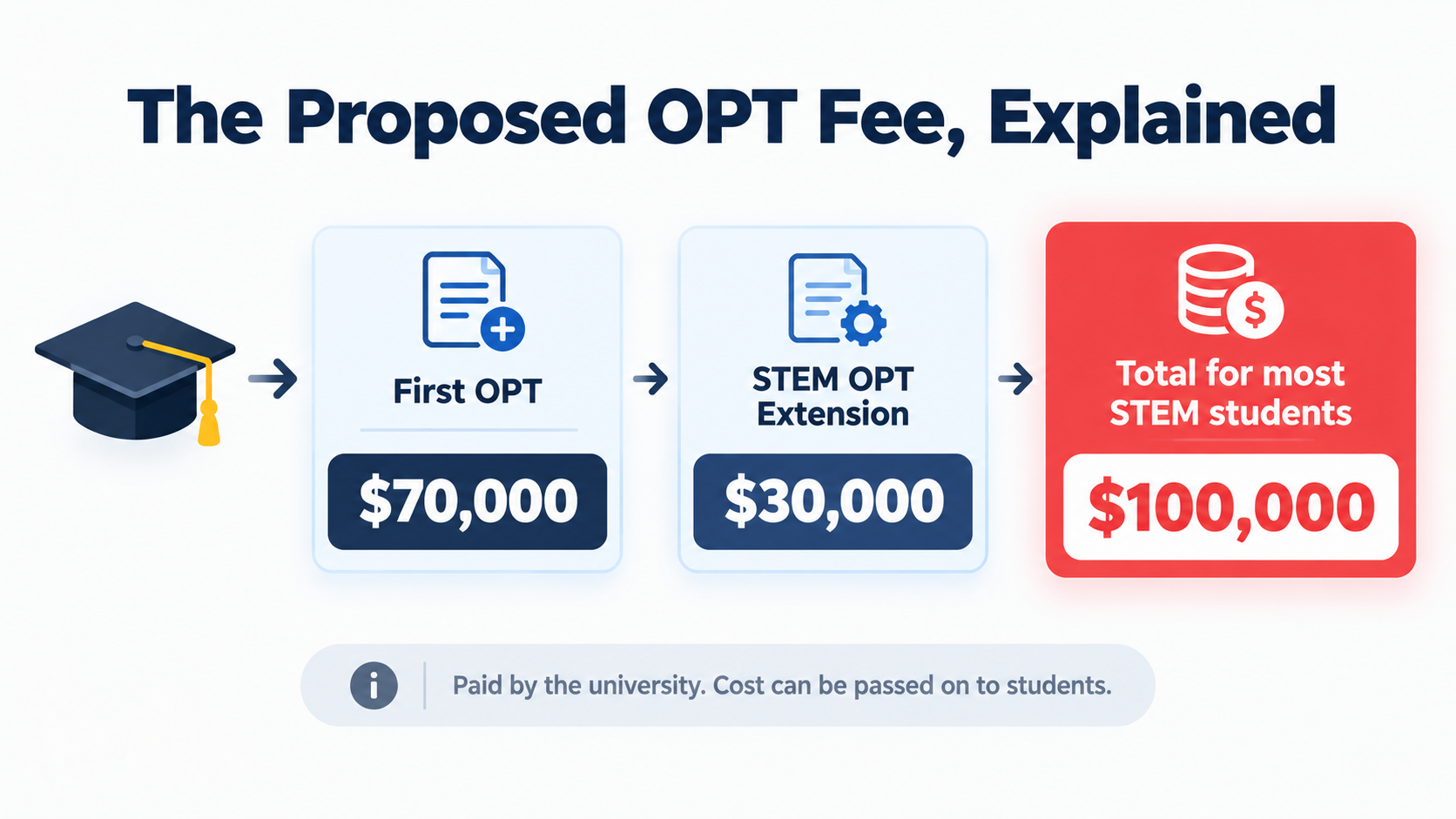
Figure 1: For a typical STEM student who uses both OPT and STEM OPT, the proposed cost goes up to $100,000.
The School Pays… But Who Really Pays?
On paper, the university pays the fee, not the student or the employer (Cronista).
But here is the catch. The US government itself has said that schools may choose to pass this cost on to international students, to all students, or to employers (Federal Register).
So in real life, there are only three possibilities:
- Universities raise fees for international students. Your total cost of study goes up.
- Universities stop recommending OPT for many students, because they cannot afford it.
- Employers are asked to pay, and most companies will simply not hire an OPT student for $70,000 extra.
DHS itself expects schools to push students towards post-completion OPT only, so that they don't pay the fee twice (National Law Review).
Either way, the student loses.
Why Is the US Doing This?
The US government says OPT is being misused. Its argument is that companies use OPT to avoid H-1B rules such as the yearly cap, fees and minimum wage requirements. DHS even said it designed the $70,000 fee to closely match the H-1B fees. It also says the fee will help fight fraud, fake "visa mill" schools and shell companies, and protect American workers in STEM jobs (Federal Register).
But critics have a strong reply. NAFSA, the association of international educators, says OPT helps students gain real experience and fills shortages in high-demand STEM fields (US News / AP). Former USCIS adviser Doug Rand said America should welcome students it has educated, instead of using a huge fee as an excuse to send them home (PBS / AP).
💡 Remember this: During his 2024 campaign, President Trump said foreign students who graduate from US universities should get a green card automatically (Star Advertiser). Two years later, his government wants to charge $70,000 just for a work permit.
Why This Hurts Indian Students the Most
- Indians and Chinese together are 53% of all international students in US academic programs or OPT (ICEF Monitor).
- In 2025, 40% of all Indian students in the US were on OPT (ICEF Monitor).
- A Chronicle of Higher Education survey found that more than half of international students would not choose the US if they could not get OPT (ICEF Monitor).
- New international enrollment in the US has already fallen by 17% (Fortune).
Think about a typical Indian family. They take an education loan that often runs into tens of lakhs for a Master's degree, sometimes by pledging their house. The only way that loan makes sense is if the student can work in the US for a few years afterwards. If OPT becomes too expensive, the whole plan breaks.
Is It Final? The Timeline
No, it is not final. Here is where things stand:
| Date | What Happens |
|---|---|
| 7 October 2026 | DHS announces the proposal |
| 8 October 2026 | Proposal published officially |
| 9 November 2026 | Last date for public comments |
| Later (date not fixed) | DHS reviews comments and may publish a final rule |
| 60 days after final rule | Fee starts, if the rule is finalized |
Source: Federal Register
The fee would only apply to OPT recommendations made on or after the date the final rule takes effect (Federal Register).
Will Courts Stop It?
There is real hope here. Many legal experts expect this rule to be challenged in court if it is finalized (Meltzer Hellrung). Doug Rand has predicted it will be struck down, just like the $100,000 H-1B fee was (Fortune).
That H-1B fee was declared unlawful by a federal judge in June 2026, and an appeals court refused to bring it back in July 2026 (Ellis). Another rule that would have limited student visas to four years was also blocked by a court on 14 September 2026 (Clark Hill).
Some experts argue that a $70,000 charge with no link to processing costs is basically a tax, and only the US Congress can create taxes (Immigration Analytics).
But a court case is never a guarantee. Plan as if the rule could happen, and hope that it doesn't.
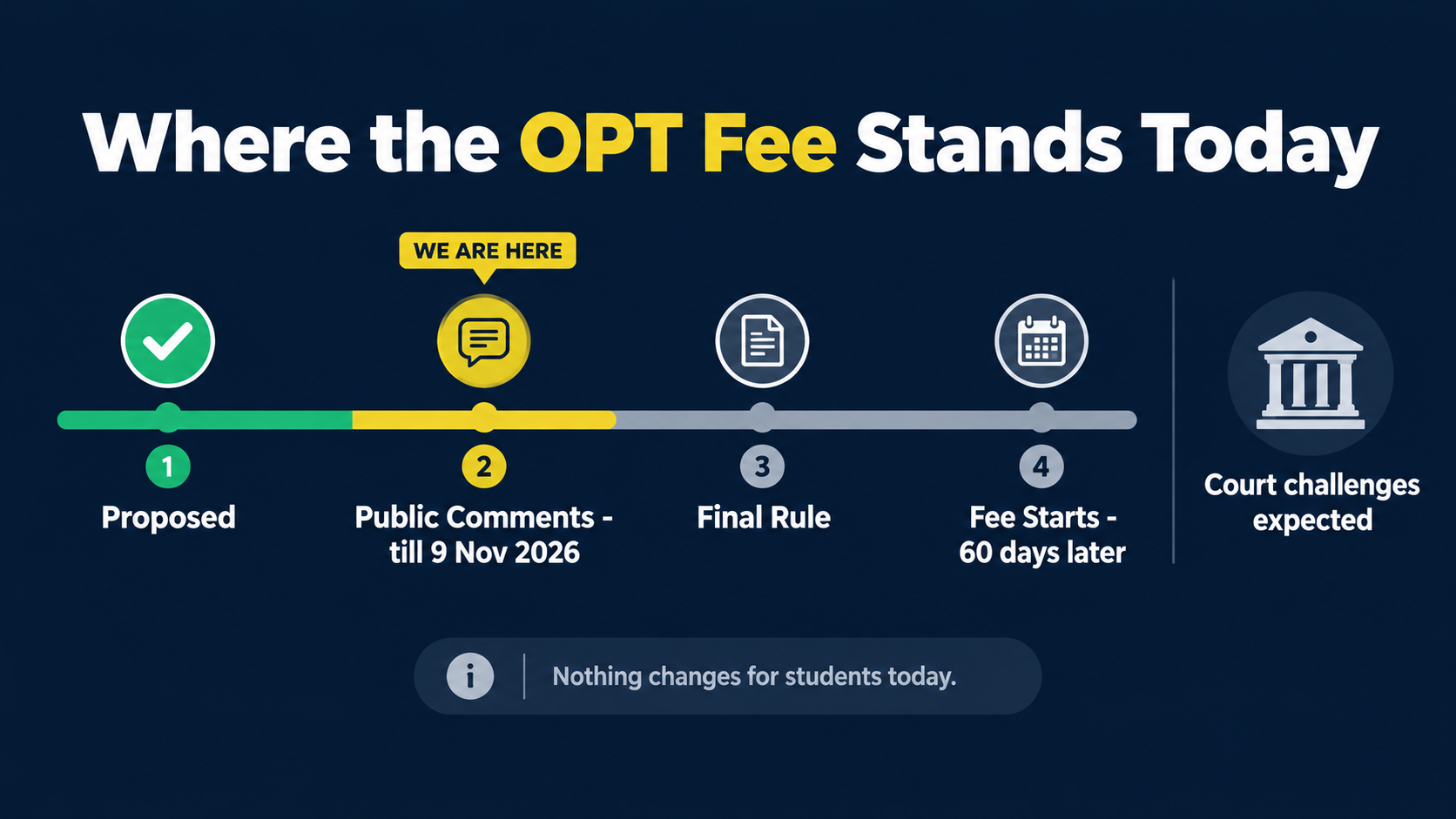
Figure 2: The OPT fee is only a proposal right now. Nothing changes for students today.
What Should Indian Students Do Right Now?
If you are already studying in the US:
- Don't panic. Nothing changes today.
- Talk to your university's international student office (DSO). Ask how the school plans to handle the fee if it becomes final.
- Plan your OPT and STEM OPT dates carefully with your DSO. Timing may matter a lot.
- CPT is not covered by this rule, so ask if CPT options are available in your program.
If you are planning to go to the US:
- Don't cancel your plans in panic, but don't sign a big loan without thinking either.
- Ask universities directly how they will handle OPT costs if the rule becomes final.
- Compare other countries and their post-study work options before you decide.
- Build practical skills now. Real project experience makes you employable anywhere, not only in one country.
For everyone: You can submit a public comment on the proposal before 9 November 2026 on the Federal Register page for this rule. Explain in simple words how this fee affects you and your family. These comments are officially reviewed.
Final Thoughts
OPT was the reason many Indian families felt a US degree was worth the loan. A $70,000 price tag on it changes the whole calculation. The US says it wants to stop misuse, but the people who will pay the price are honest students who simply want to use what they learned.
The proposal may still be changed, delayed or stopped by courts. But the bigger message is clear: depending on one country's visa rules is risky. The safest investment is in skills that make you valuable wherever you go.
Want to understand the full journey, from student visa to green card, and every rule that changed in 2026? Read our complete guide: US Green Card Guide for Indian Students and Tech Professionals (2026).
🚀 Get real work experience without a visa
The MetaSkillGroup Internship is fully remote. Work on real-world web and app projects, get your code reviewed by experienced developers, and build a portfolio that companies actually look at.
- #opt
- #stem opt
- #f-1 visa
- #study in usa
- #indian students"
- #opt fee
- #us visa news
❓ FAQs
No. It is only a proposed rule. The public can comment until 9 November 2026. After that, the US has to publish a final rule, and the fee would start only 60 days after that. Nothing changes for students today.
On paper, the university pays it. But the US government itself has said schools may pass the cost on to international students, all students or employers. So in real life, students may end up paying through higher fees.
If the school already paid $70,000 for your first OPT, a STEM OPT extension would cost $30,000 more, so $100,000 in total. If STEM OPT is your first OPT after the rule starts, it would cost $70,000.
No. Curricular Practical Training (CPT) is outside this proposed rule. It only covers OPT, including pre-completion, post-completion and STEM OPT.
The proposal does not clearly say what happens to students already on OPT. A student who asks for a STEM extension after the rule starts will likely be charged. Ask your university's international student office for your exact case.
Many experts think so. A similar $100,000 H-1B fee was struck down by a federal court in June 2026, and lawyers expect legal challenges if the OPT fee is finalized. But nothing is certain until a court actually rules.
Comments
Join the conversation
Login to post comments and replies
No comments yet. Be the first!