Tech Industry NewsDeveloper Careers
US Blocks Microsoft, Infosys, TCS and 5 Other Firms From Green Card Sponsorship: What It Means for Indians
The US has suspended Microsoft, Adobe, Infosys, TCS, Wipro, HCL, Cognizant and Capgemini from PERM, the first step of most job-based green cards. Here is what happened, why the US says it did this, and what it means for lakhs of Indian tech workers waiting for a green card.

MetaSkillGroup
10 min read9

On 8 October 2026, the US government stopped eight big companies from sponsoring green cards for their foreign workers. Two of them are American tech giants, Microsoft and Adobe. The other six are IT services firms where lakhs of Indians work: Infosys, TCS, Wipro, HCL, Cognizant and Capgemini.
If you, your friend or someone in your family works at one of these companies in the US, this news is important for you. And if you are a student in India who dreams of working in America one day, this news is important for you too.
In this article, we explain what happened, why the US says it did this, and why it is bad news for Indian tech workers, in simple words.
📌 Quick Summary
- What happened: The US Department of Labor suspended 8 companies from PERM, the first step of most job-based green cards.
- Who announced it: US Vice President JD Vance, along with Labor Secretary Keith Sonderling, at the White House.
- Who is hit the most: Indian H-1B workers at Infosys, TCS, Wipro, HCL, Cognizant and Capgemini.
- What stops: New PERM applications, and work on PERM applications that were already pending.
- What does not change: Your H-1B visa and your permission to work stay the same.
- What is still unclear: How long the ban will last, and what happens to PERMs that were already approved.
What Exactly Happened?
On Thursday, 8 October 2026, the US Department of Labor suspended eight companies from the PERM program (Ellis). In simple words, these companies cannot use the normal job-based route to get green cards for their foreign employees right now.
The announcement was made by Vice President JD Vance at a press conference of the White House Fraud Task Force, with Labor Secretary Keith Sonderling standing next to him (OPB / AP).
Vance spoke mostly about Microsoft. But the Labor Department confirmed that the six IT services firms were also suspended in the same action (Newsweek).
Which Companies Are Affected?
| Company | Type of Company | Reason Given by the US |
|---|---|---|
| Microsoft | US tech company | Multiple active federal investigations |
| Adobe | US tech company | Multiple active federal investigations |
| Cognizant | IT services / outsourcing | Ongoing fraud investigation |
| Infosys | IT services / outsourcing | Ongoing fraud investigation |
| Tata Consultancy Services | IT services / outsourcing | Ongoing fraud investigation |
| Wipro | IT services / outsourcing | Ongoing fraud investigation |
| HCL Technologies | IT services / outsourcing | Ongoing fraud investigation |
| Capgemini | IT services / outsourcing | Ongoing fraud investigation |
One important point: no company has been found guilty of anything yet. The US has not shared what exactly it is investigating at Microsoft and Adobe, or which agencies are doing it (I-9 Intelligence).
What Is PERM? (Simple Explanation)
Most Indians in the US tech industry get their green card through their employer. This journey has a few steps, and PERM is the very first one.
Here is how it works:
- The company wants to keep a foreign worker (usually on H-1B) permanently.
- Before that, the company has to advertise the job inside America.
- Then it tells the US Department of Labor: "We tried, but we could not find a suitable American worker for this job."
- If the Labor Department agrees, PERM is approved, and the company can move to the next step (Form I-140).
So if a company is blocked from PERM, its employees' green card journey stops at the very first gate.
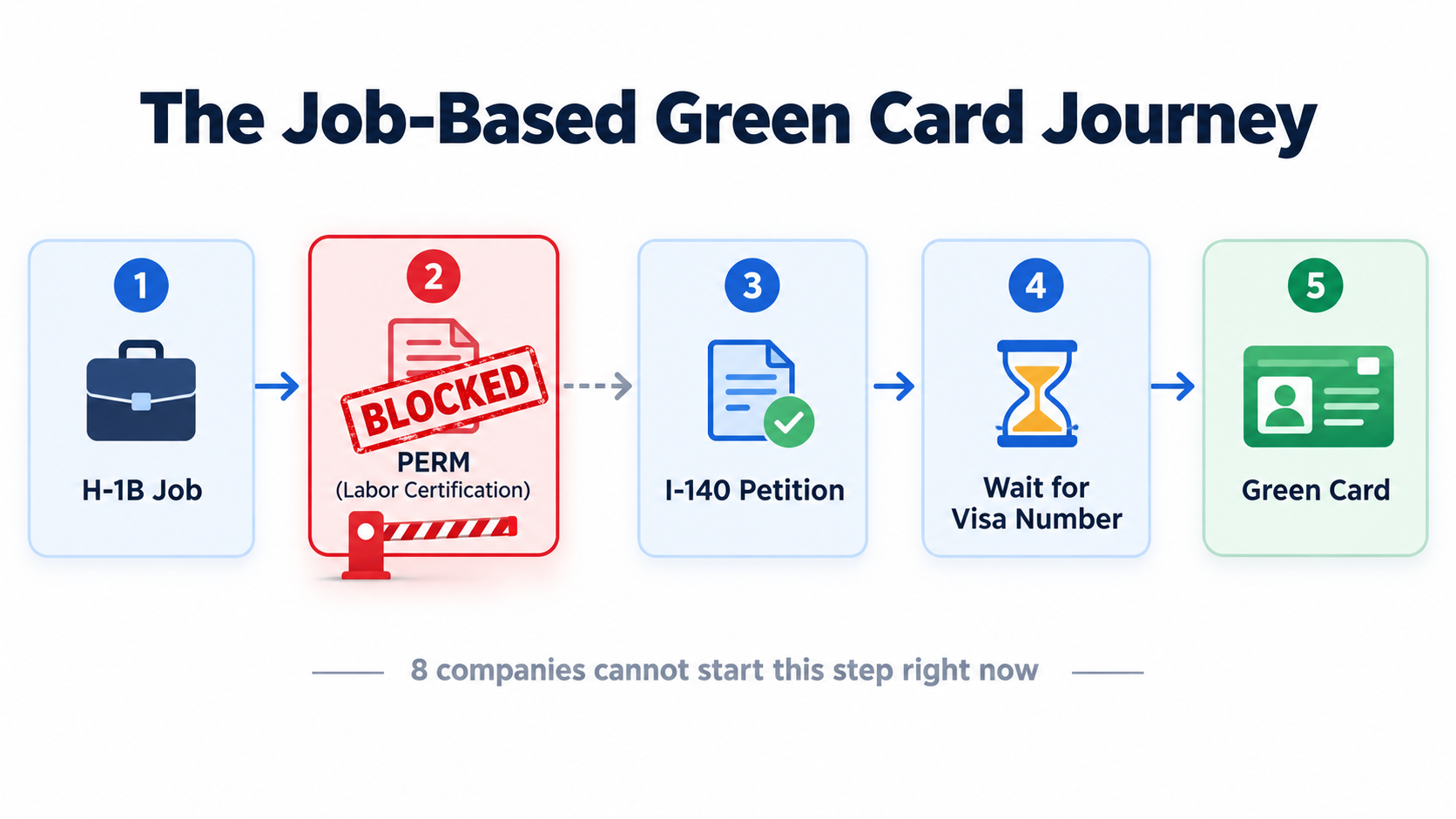
Figure 1: PERM is the first gate. If a company is blocked here, the whole green card journey stops.
Why Is the US Doing This?
Let us first hear the US government's side, because it is important to understand their argument.
Vance said that Microsoft laid off about 6,000 American workers last year, but at the same time benefited from 6,300 H-1B visas and nearly 3,000 green cards (Fox Business). He went as far as calling foreign workers "foreign indentured servants" at the press conference (NBC News).
He also claimed that visa holders are paid about $20,000 less than similar American workers, and workers hired through outsourcing firms earn about $48,000 less (WPDE).
Officials said this is part of an ongoing fraud investigation. US Attorney General Todd Blanche, who was also at the announcement, said criminal charges against companies or people are possible (Ellis).
💡 The irony: On the same day, President Trump was scheduled to give Microsoft CEO Satya Nadella the National Medal of Technology and Innovation at a White House event (WPDE). An award to the CEO in the evening, and a ban on his company in the morning.
Why This Is Bad News for Indians
The US says this action is about protecting American workers. But when you look at who actually pays the price, it is mostly Indian families.
1. Indians are the biggest group of H-1B workers
In financial year 2024, 283,397 out of 399,395 approved H-1B petitions went to people born in India. That is about 71% of all approvals (Business Today). So when the US blocks the green card route for big H-1B employers, Indians feel it first.
2. Indians are already waiting more than 10 years
Even before this news, Indians had the longest green card queue in the world. In the October 2026 Visa Bulletin, the cut-off date for EB-2 India is 1 November 2013, and for EB-3 India it is 1 January 2014 (American Visa Law Group).
In simple words, an Indian engineer who applied in 2014 is still waiting in line in 2026. Now, for workers at these eight companies, even joining the line has become difficult.
3. The workers did not do anything wrong
The US is investigating the companies. But the people who suffer are ordinary employees who followed every rule, paid their taxes, and planned their whole life around this process. Their kids are in American schools. Their home loans are in America. They cannot simply "wait and see".
4. Indian IT firms had already reduced H-1B use
The US talks about outsourcing firms as if they still bring in huge numbers of workers. But data shows that new H-1B approvals for India-based IT companies fell by about 70% between FY2015 and FY2025 (The Tribune). Cognizant, for example, got 3,510 H-1B approvals in 2026, compared to 9,413 in 2020 (ThePrint).
5. A green card actually protects workers
This is the strongest point against the US argument. Former USCIS official Doug Rand pointed out that if the US really believes H-1B workers are trapped with their employers, then blocking their green cards makes it worse. Once a worker gets a green card, they can change jobs freely and ask for a better salary (Yahoo News).
So the US is complaining that foreign workers are underpaid, and then blocking the one thing that helps them earn more.
This Did Not Happen Overnight
This action is part of a bigger pattern. Look at how quickly things moved:
- May 2026: USCIS made it much harder to apply for a green card from inside the US. Read our full explainer on this rule.
- August 2026: The US proposed a new $103,265 fee on H-1B petitions (AP via Washington Times).
- 8 September 2026: Cognizant's PERM filings were suspended for the first time, by the Labor Department's Inspector General (ThePrint).
- 7 October 2026: The US proposed a $70,000 fee for international students to work after graduation. Read our full explainer on the OPT fee.
- 8 October 2026: Eight companies suspended from PERM. On the same day, nine universities including Harvard, Stanford and MIT came under investigation over visas used by postdoc researchers (STAT).
In about one month, the list of suspended companies grew from one to eight, so more names may be added (Ellis).
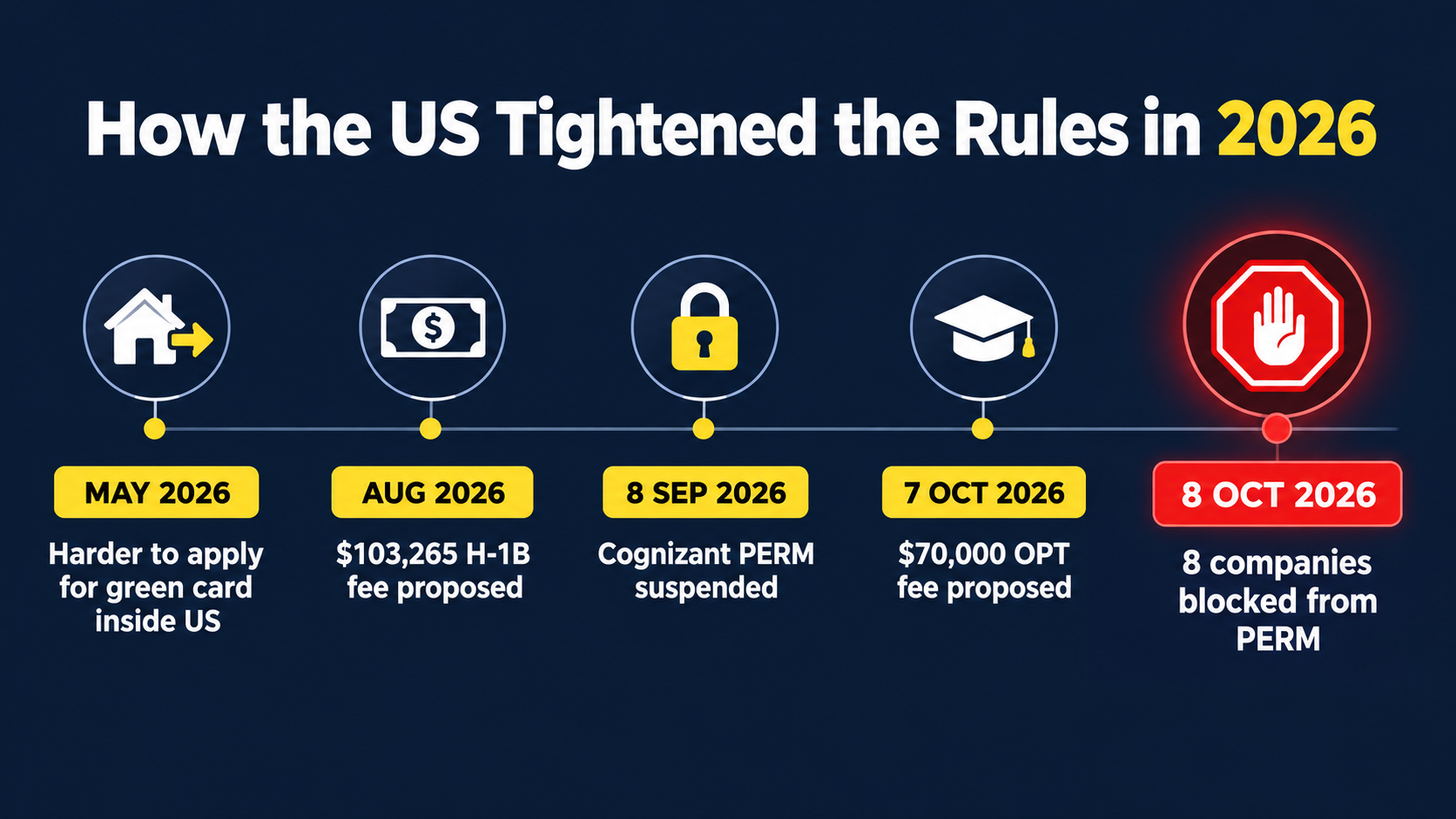
Figure 2: One rule after another. The October 2026 PERM suspension is the latest step in a long series.
What Happens Now? (What We Know and What We Don't)
What we know:
- The Labor Department will not accept new PERM applications from these eight companies, and it has also stopped work on applications that were already filed (Ellis, WR Immigration).
- The suspension blocks green card labor certifications. It does not cancel anyone's work permission (I-9 Intelligence).
- Microsoft has said it will give the US government more details about how it uses the program (Yahoo News).
What we don't know yet:
- How long it will last: No end date has been set. Under the US rule that likely applies, a first suspension can last up to 180 days, and it can be extended while an investigation or court case continues (Ellis).
- Already-approved PERMs: The announcement did not say what happens to PERMs that were approved but have not yet reached the I-140 stage (Ellis).
- What exactly the companies did wrong: No details have been made public.
⚠️ Note: This is a developing story. Rules and details may change in the coming days. Always check with your company's immigration lawyer before taking any big decision.
What Should Indian Workers Do Right Now?
If you work at one of these eight companies in the US, here is a simple checklist:
- Don't panic. Your H-1B status and job are not cancelled by this order.
- Talk to your HR and immigration team. Ask clearly: "Where exactly is my green card case right now? PERM, I-140, or later?"
- Know your stage. If your PERM was not filed yet, or was pending, your case is paused for now. If your PERM is already approved, the government has not yet said what happens next, so ask your lawyer before taking the next step.
- Keep all your documents ready: I-797 approvals, pay slips, offer letters and any I-140 approval notice.
- Think about your options calmly. A new employer that is not suspended can start a fresh PERM for you. If your I-140 was approved at least 180 days ago, it usually keeps your priority date, even if the employer later withdraws it (Ellis). Get legal advice before switching.
- Avoid travelling outside the US without talking to a lawyer, especially while things are unclear.
Final Thoughts
The US says it wants to protect its own workers, and every country has the right to protect its workers. But the way this is being done hurts people who did nothing wrong. Indian engineers who built their careers in America, followed every rule, and waited more than a decade in line are now being told to wait even longer.
For Indian students and young developers, the message is clear: don't build your whole career plan on one country's visa policy. Build skills that are valuable anywhere, whether you work in Bengaluru, Berlin or Boston.
To understand the full journey, from student visa to green card, and every rule that changed in 2026, read our complete guide: US Green Card Guide for Indian Students and Tech Professionals (2026).
🚀 Build skills that work anywhere
The MetaSkillGroup Internship gives you hands-on experience on real-world web and app projects, guided by experienced developers. Real projects, real code reviews, and skills that companies in India and abroad look for.
- #green card
- #perm
- #h-1b
- #us immigration
- #infosys
- #tcs
- #indian it professionals
- #microsoft
- #us visa news
❓ FAQs
Eight companies: Microsoft, Adobe, Cognizant, Infosys, Tata Consultancy Services (TCS), Wipro, HCL Technologies and Capgemini. Six of them are IT services firms that employ a large number of Indians.
PERM is the first step of most job-based green cards. The company has to prove to the US Department of Labor that it could not find a suitable American worker for the job. Only after PERM is approved can the company move to the next steps of the green card.
No, not because of this order. The suspension stops green card sponsorship through PERM. It does not cancel anyone's H-1B status or permission to work. Your job and visa stay as they are, but your green card plan may be delayed.
They are also on hold. The Labor Department will not accept new PERM applications from these eight companies and has stopped work on the ones already filed. What happens to PERMs that were already approved is not clear yet, so talk to your company's immigration lawyer for your exact case.
No end date has been set. Under the US rule that likely applies, a first suspension can last up to 180 days and can be extended while an investigation or court case continues. Officials called it part of an ongoing fraud investigation.
Yes, a new employer that is not suspended can start a fresh PERM for you. If your I-140 was approved at least 180 days ago, it usually keeps your priority date even if the old employer withdraws it. Get legal advice before you switch, because every case is different.
Comments
Join the conversation
Login to post comments and replies
No comments yet. Be the first!